Best Books on InvestingBest Books on Wealth BuildingBest Books on EconomicsBest Books on Personal Finance
Part of Best Books on Wealth Building →
Curated Reading on Money, Wealth & Economics

5 books to read in order to build financial freedom

This isn't a ranking — it's a sequence. Each book below picks up exactly where the last one leaves off, from resetting how you think about wealth to deciding what to actually do once you have it. Read them out of order and pieces won't land the way they're supposed to.

Curated by Capital Readers — updated monthly with the titles worth your time.
Compiled by Capital Readers Team — researched and curated from published reviews, reader consensus, and AI-assisted analysis
Rankings are researched and reviewed before publishing. How we choose books →
Last updated

Read In This Order

The 5-book roadmap to financial freedom

A sequence, not a ranking. Each entry assumes you've already read the ones before it — start at the top even if a later book looks more relevant to you right now.

Cover of The Millionaire Fastlane by MJ DeMarco

The Millionaire Fastlane

by MJ DeMarco · 2011

The starting point because it attacks the assumption everything else on this list takes for granted: that wealth is built slowly, through decades of a stable job and a diversified portfolio. DeMarco's case for building or buying a scalable asset instead is aggressive and occasionally overstated, but it's the right book to shake loose a mental model before you spend years inside it.

Core idea
The default path to wealth works, but it's not the only lane — and assuming it's the only one closes off faster paths worth at least considering.
Read it if
You've accepted "get rich slowly" as the only option and haven't actually examined it.
Skip it if
You already have a plan you're happy with — the pitch here is deliberately combative.
Buy on AmazonBookshop.orgPaperback · Kindle · Audiobook
Cover of Set for Life by Scott Trench

Set for Life

by Scott Trench · 2017

Once the mindset is unstuck, this is the mechanical follow-up: an aggressive plan to compress the distance between your income and your expenses by attacking the three biggest line items — housing, transportation, and food — rather than trimming coffee purchases. The goal isn't frugality for its own sake, it's runway.

Core idea
Financial freedom is a function of the gap between income and expenses, and the three biggest expense categories are where that gap actually gets built.
Read it if
You have decent income but no real savings rate yet.
Skip it if
You've already optimized housing and transportation — the specific tactics here won't be new.
Buy on AmazonBookshop.orgPaperback · Kindle · Audiobook
Cover of Financial Freedom by Grant Sabatier

Financial Freedom

by Grant Sabatier · 2019

With a savings rate in place, the next step is defining the actual target and building income beyond a single salary to hit it faster. Sabatier is candid about having done this in five years from a low starting point, and the book is as much about side income and negotiating pay as it is about spending less.

Core idea
Financial freedom has a specific, calculable number attached to it, and increasing income moves you toward it faster than cutting expenses does past a certain point.
Read it if
You want to calculate your actual number and a timeline, not just a general direction.
Skip it if
You're not interested in building income streams beyond a primary job.
Buy on AmazonBookshop.orgPaperback · Kindle · Audiobook
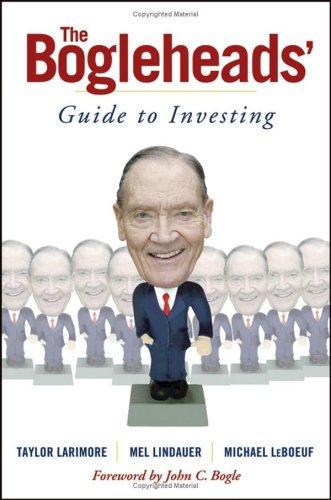
Cover of The Bogleheads' Guide to Investing by Taylor Larimore, Mel Lindauer & Michael LeBoeuf

The Bogleheads' Guide to Investing

by Taylor Larimore, Mel Lindauer & Michael LeBoeuf · 2006

Once there's real money to put somewhere, this is the least glamorous and most reliable answer: low-cost index funds, a simple asset allocation, and leaving it alone. Written by moderators of the Bogleheads forum rather than a single celebrity author, which shows in how little it tries to sell you.

Core idea
A boring, low-cost, broadly diversified portfolio outperforms most attempts to be clever, and the evidence for that is no longer seriously contested.
Read it if
You're ready to actually invest the savings rate you've built and want the simplest reliable answer.
Skip it if
You've already read Malkiel or Housel from our investing list — the core argument overlaps significantly.
Buy on AmazonBookshop.orgPaperback · Kindle
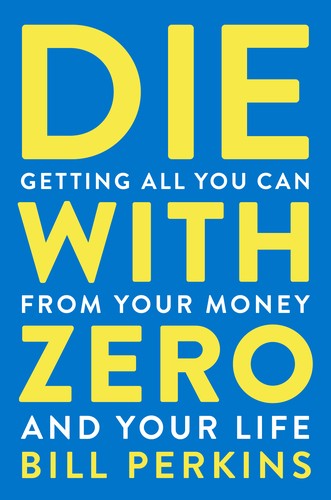
Cover of Die With Zero by Bill Perkins

Die With Zero

by Bill Perkins · 2020

The roadmap's deliberate final step, and the one most accumulation-focused books skip entirely: once the system above is working, the risk shifts from under-saving to over-saving indefinitely. Perkins argues for spending deliberately against a finite life, not just building a portfolio that grows forever.

Core idea
A financial freedom plan with no spending phase isn't actually freedom — it's accumulation with better vocabulary.
Read it if
You've built a working system and haven't thought yet about what it's actually for.
Skip it if
You're still early in the sequence — this book assumes steps one through four are already working.
Buy on AmazonBookshop.orgHardcover · Kindle · Audiobook
“A savings rate without a mindset shift is a diet. A mindset shift without a savings rate is a daydream. You need both, in that order.”
— Capital Readers, Editorial Note
How this list was made

Why this order, specifically

The sequence matters more than any individual title here. DeMarco goes first because the other four only make sense if you've already questioned the default "get rich slowly" script. Trench follows with the mechanical foundation — a real savings rate, built from the three biggest expense categories rather than small cuts. Sabatier comes third because once there's a savings rate, the faster lever is income, and he's specific about the number you're actually working toward. Larimore, Lindauer, and LeBoeuf take the money that system produces and put it somewhere boring and reliable. Perkins closes the sequence deliberately: every book before his is about accumulation, and his is the only one that asks what the accumulation was for. Swap the order and step four in particular stops making sense — there's nothing to invest until steps two and three are working.

Why isn't this ranked by quality like your other lists?

Because ranking would misrepresent it. These five books solve different, sequential problems — mindset, savings rate, income, investing, and spending — and reading them out of order means arriving at later steps without the foundation they assume.

Can I skip a step if it doesn't apply to me?

Skip DeMarco if you're already convinced wealth is worth pursuing deliberately. Don't skip Trench or Sabatier even if they look basic — steps four and five both assume the savings rate and income work from steps two and three are already done.

How does this connect to your other lists?

Step four overlaps with our investing list — read The Bogleheads' Guide to Investing here, or Malkiel and Housel there, not necessarily all three. If you're carrying debt, our debt list comes before step two, not after it.

Is any of this advice, formally?

No. This is a reading sequence, not personalised financial advice, and "financial freedom" means something different depending on your income, debts, and goals — none of which a book can know.

More Reading Lists

View All Lists →

One list. One book. Every two weeks.

A short, opinionated email — no filler, no fifty-book roundups. Just what's worth reading next.

As an Amazon Associate and Bookshop.org affiliate, we earn from qualifying purchases.