Best Books on InvestingBest Books on Wealth BuildingBest Books on EconomicsBest Books on Personal Finance
Curated Reading on Money, Wealth & Economics

The best books to actually understand the economy

You cannot read the news usefully without a model of how credit, prices, and power move together. These five supply that model, from Smith's markets to the anatomy of a modern crisis.

Curated by Capital Readers — updated monthly with the titles worth your time.
Compiled by Capital Readers Team — researched and curated from published reviews, reader consensus, and AI-assisted analysis
Rankings are researched and reviewed before publishing. How we choose books →
Last updated

Best Books on Economics

The 5 books that explain how the economy really moves

No textbooks and no jargon — histories and arguments written by people who can explain a credit cycle without a chalkboard.

Cover of The Wealth of Nations by Adam Smith

The Wealth of Nations

by Adam Smith · 1776

The founding text, and far less doctrinaire than the people who quote it. Smith on the division of labour, and on the self-interest of merchants, is still the sharpest introduction to how prices coordinate strangers.

Core idea
Prices coordinate the actions of strangers who have no knowledge of each other.
Read it if
You want to know what Smith actually wrote rather than what he is quoted as writing.
Skip it if
You want a short read — get an abridged edition instead.
Buy on AmazonBookshop.orgHardcover · Paperback · Kindle
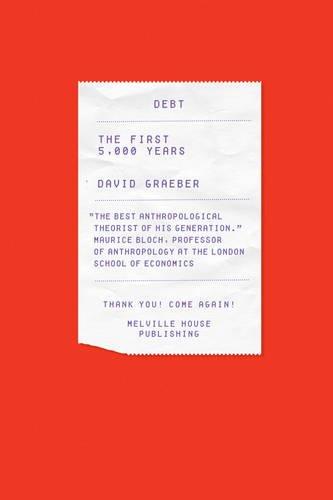
Cover of Debt: The First 5,000 Years by David Graeber

Debt: The First 5,000 Years

by David Graeber · 2011

An anthropologist's history of credit that upends the textbook story of money emerging from barter. Contested by economists, and worth reading precisely for the argument it starts.

Core idea
Credit relationships predate coinage; debt is social before it is financial.
Read it if
You want the assumptions behind the textbook story examined.
Skip it if
You want settled consensus — this book is disputed on specifics.
Buy on AmazonBookshop.orgPaperback · Kindle · Audiobook
Cover of Manias, Panics, and Crashes by Charles P. Kindleberger & Robert Z. Aliber

Manias, Panics, and Crashes

by Charles P. Kindleberger & Robert Z. Aliber · 1978

The pattern-recognition manual for bubbles: displacement, credit expansion, euphoria, distress, revulsion. Once you have the sequence in mind you will see it forming in real time.

Core idea
Bubbles follow a repeatable five-stage sequence driven by credit expansion.
Read it if
You want one framework that explains every crash you have lived through.
Skip it if
You want forecasting rules — it explains, it does not predict timing.
Buy on AmazonBookshop.orgHardcover · Paperback · Kindle
Cover of This Time Is Different by Carmen M. Reinhart & Kenneth S. Rogoff

This Time Is Different

by Carmen M. Reinhart & Kenneth S. Rogoff · 2009

Eight centuries of financial crises assembled into data rather than anecdote. A permanent inoculation against optimism about sovereign debt; denser than the others here.

Core idea
Default and banking collapse are ordinary recurring events, not aberrations.
Read it if
You want the evidence base rather than the narrative.
Skip it if
Charts and data tables are not how you like to read.
Buy on AmazonBookshop.orgPaperback · Kindle
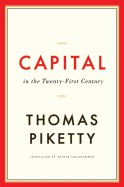
Cover of Capital in the Twenty-First Century by Thomas Piketty

Capital in the Twenty-First Century

by Thomas Piketty · 2013

The most influential economics book of the century so far, built on two hundred years of tax records. Long, but the historical chapters read like narrative.

Core idea
When returns on capital outpace growth, wealth concentrates by default.
Read it if
You want to understand the inequality debate from its most cited source.
Skip it if
Six hundred pages is not the commitment you had in mind.
Buy on AmazonBookshop.orgHardcover · Paperback · Kindle · Audiobook
“It is not from the benevolence of the butcher, the brewer, or the baker, that we expect our dinner.”
— Adam Smith
How this list was made

Why history, and not a textbook

An introductory economics textbook teaches you models; these books teach you what happened, which is the faster route to reading a central bank statement with any confidence. The list is deliberately argumentative rather than neutral: Graeber and Piketty are contested by serious economists, and both are included with that noted, because a reader who has followed a real disagreement understands more than one who has memorised a consensus. Kindleberger sits in the middle as the most practically useful — it is a field guide to the bubble you are currently living in.

Which of these should I read first?

Manias, Panics, and Crashes. It is the shortest route to a working model of credit cycles, and it makes the other four easier to place.

Do I need an economics background?

No, with one exception: This Time Is Different is data-heavy and assumes comfort with charts. The other four are written for general readers.

Is Piketty's argument still accepted?

Parts of it are contested, particularly the r > g formulation and some of the wealth-tax conclusions. The historical data work is widely respected. Read it as the opening of a debate, not the end of one.

Where is Keynes, or Friedman?

Both are primary sources worth reading eventually, but neither is the most efficient way to acquire a first model of the economy. This list optimises for the reader who wants to understand the news, not the history of the discipline.

Explore This Topic Further

Back to This List →

More Reading Lists

View All Lists →

One list. One book. Every two weeks.

A short, opinionated email — no filler, no fifty-book roundups. Just what's worth reading next.

As an Amazon Associate and Bookshop.org affiliate, we earn from qualifying purchases.